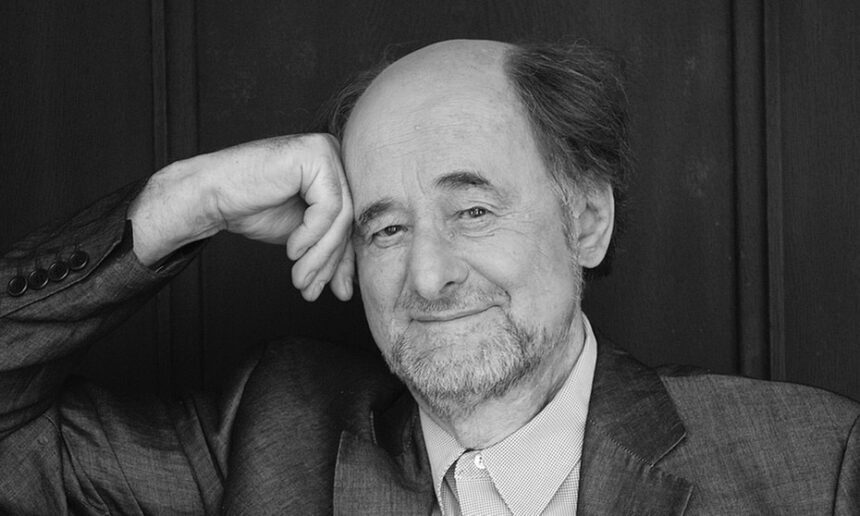
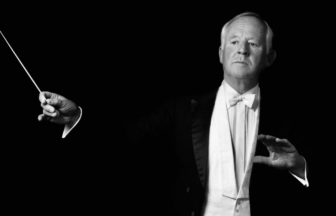
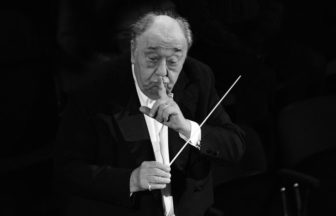
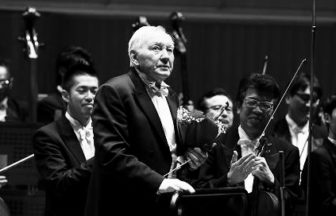
British conductor Roger Norrington passed away on July 18 at the age of 91. He was a pioneer in the early music scene, known for his use of period instruments to shed new light on works ranging from classical to Romantic compositions.
He was born in Oxford and grew up as the son of the Vice-Chancellor of Oxford University. He went on to study English literature at Clare College, Cambridge, where he was a member of the college choir. He later studied conducting under Adrian Boult at the Royal Academy of Music.
After graduating, he worked as a tenor singer before founding the Schütz Choir (later the London Schütz Choir) in 1962. In 1969, he was appointed music director of the newly established Kent Opera, where he gained attention for his experimental approaches until his retirement in 1984.
He then founded the London Baroque Players (later the London Classical Players) in 1975, performing on original instruments and leaving behind numerous distinctive recordings.
In the 1990s, he was diagnosed with leukemia but returned to work after receiving alternative treatment in the United States. However, the London Classical Players disbanded in 1997 and was absorbed into the Age of Enlightenment Orchestra.
Additionally, from 1998 to 2011, he served as chief conductor of the Stuttgart Radio Symphony Orchestra in Germany, gaining acclaim for his performances of Beethoven’s complete symphonies, which showcased a bold new sound achieved through a combination of metronomic precision in tempo and a non-vibrato playing style.
He served as chief conductor of the Zurich Chamber Orchestra from 2011 to 2015.He retired from conducting on November 18, 2021, after his final performance with the Royal Northern Sinfonia in the UK. He was awarded the Order of the British Empire (OBE) in 1980, the Commander of the Order of the British Empire (CBE) in 1990, and the title of Knight Bachelor in 1997.
PHOTO:Manfred Esser




No comments yet.