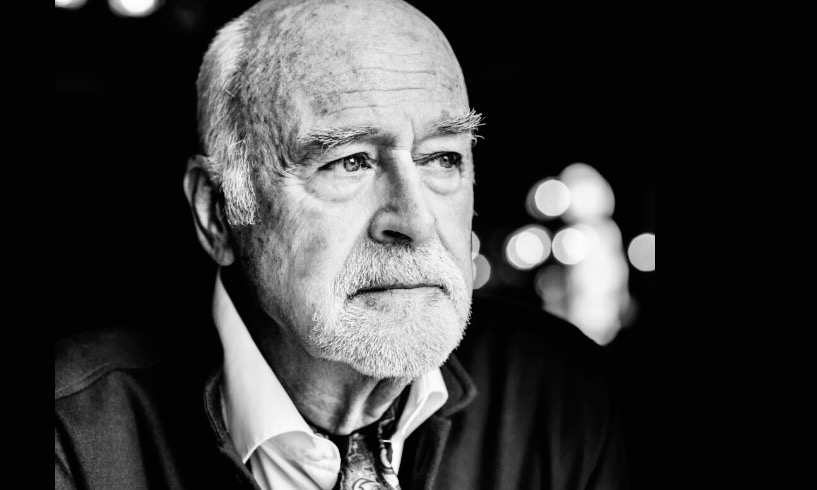
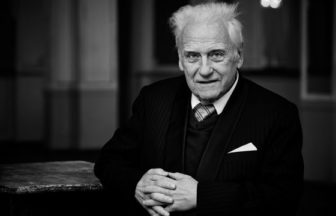
Belgian bass-baritone José van Dam passed away on February 17. He was 85. Discovered by the legendary conductor Herbert von Karajan, he achieved international renown, performing not only in opera but also as a singer in concerts, oratorios, and lieder.
He was born in Ixelles, near the capital city of Brussels. His real name is Joseph van Damme. At age 17, he entered the Royal Conservatory of Brussels, and graduated at the top of his class. In 1960, he made his opera debut at the Opéra Royal de Wallonie-Liège as Don Basilio in Rossini’s “The Barber of Seville”.
The following year, he signed with the Opéra national de Paris. During his five-year tenure there, he performed his first major role as Escamillo in Bizet’s Carmen. After Paris, he spent two years with the Grand Théâtre de Genève. In 1967, he was invited by Lorin Maazel to join the Deutsche Oper Berlin.
A major turning point came when he was discovered by Karajan, one of the defining conductors of the 20th century. After his debut at the Salzburg Festival in 1968, he made repeated appearances, singing roles such as Don Fernando, Figaro, Goro, and Amfortas under Karajan, solidifying his presence. He subsequently performed at renowned opera houses worldwide and at major international music festivals.
He remained in Berlin until 1973 and was awarded the title of “Court Singer” in 1974. In 1983, he participated in the world premiere of Messiaen’s “Saint François d’Assise” at the Opéra National de Paris, singing the title role under Seiji Ozawa’s baton. He also received acclaim in a production staged at the Salzburg Festival in 1992, directed by Peter Sellars.
While renowned as an opera singer, he is also highly regarded for his performances in concerts, oratorios, and lieder. In 1988, he starred as an aging opera singer in Gérard Corbiau’s film “Le Maître de musique”, where his acting also garnered acclaim. In 1998, he was awarded the title of Baron by King Albert, and he performed at the wedding of Crown Prince Philippe in 1999.
The remaining recordings are also vast, and he collaborated with Karajan on Mozart’s “The Magic Flute”, Beethoven’s “Fidelio”, Verdi’s “Don Carlo”, Debussy’s “Pelléas et Mélisande”, and Wagner’s “Parsifal”.
In addition to Karajan, he also made famous recordings. He had with Georg Solti of Wagner’s “Die Meistersinger von Nürnberg” and Richard Strauss’s “Die Frau ohne Schatten”, with Michel Plasson of Gounod’s “Faust” and Massenet’s “Don Quichotte”, and with Ozawa of Messiaen’s “Saint François d’Assise”.
In 2010, he retired from the opera stage after performing in Don Quixote at the Théâtre Royal de la Monnaie in Brussels. From the following year, he began teaching the next generation at the Queen Elisabeth Music Conservatory. He has received numerous international awards, including the Lifetime Achievement Award at the Opera Awards 2024.
PHOTO:Nomi Baumgartl


No comments yet.